Blog

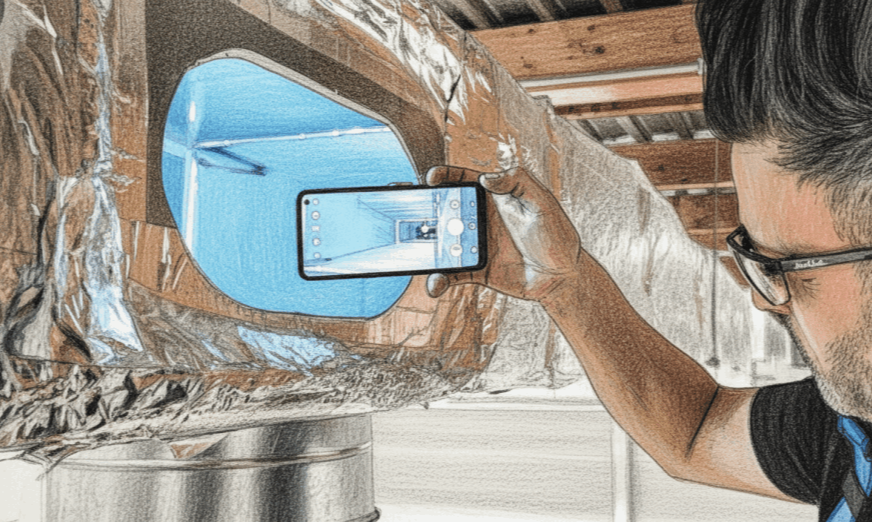
The Inspection Hatch Paradox

In many buildings, there’s an assumption that if contamination isn’t visible, it isn’t a problem. Unfortunately, the most critical parts of a ventilation system — bends, dampers, silencers — are often hidden inside sections of ductwork that were never designed to be opened.

EN 15780:2025

From July 2025, the updated European standard EN 15780:2025 becomes mandatory for new projects and the reference point for maintenance and audit inspections. Unlike the 2011 version, the new standard introduces practical, and measurable requirements.

The 95G method

For facility managers, a clean and compliant ventilation installation doesn’t happen by chance. It requires structured insight, skilled execution and consistent follow‑up; a systematic process designed to give full control over hygiene, compliance and audit readiness.

What Facility Managers Need to Know.

In many buildings, there’s an assumption that if contamination isn’t visible, it isn’t a problem. Unfortunately, the most critical parts of a ventilation system — bends, dampers, silencers — are often hidden inside sections of ductwork that were never designed to be opened.

This creates the Inspection Hatch Paradox: you may order a “full system cleaning”, but without the right access points, the most dangerous areas remain untouched.

Two Systems 

Different Risks, Same Problem

Kitchen Extraction

Grease fires rarely start in the hood. They ignite deep inside vertical shafts and long horizontal ducts where grease has hardened over years of operation.

Comfort Ventilation

In offices, hospitals and care facilities, dust, fibres and lint accumulate in inaccessible areas. These materials can act as a fire accelerator, allowing flames and smoke to bypass fire doors and spread through the building.

Hidden Hazards You Can’t Ignore
    The “Fuel Vault”
In extraction systems, inaccessible duct sections become storage zones for grease and dust — a ready-made fuel source during a fire.

    The “Dust Fuse”
In comfort ventilation, dry dust can carry fire rapidly through ceilings and service voids, turning a small incident into a building-wide event.

    Clinical Environments
In hospitals and care centres, inaccessible ducts become stagnant pockets where mould and bacteria thrive, directly affecting patient safety.


EN 12097: The Standard That Defines Accessibility
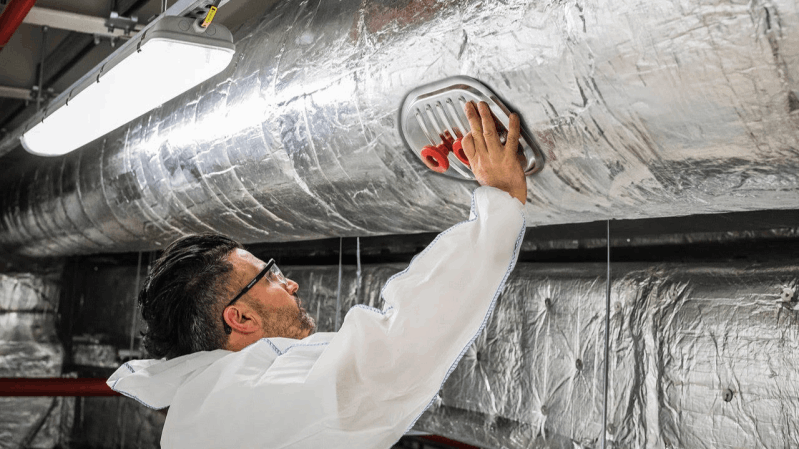
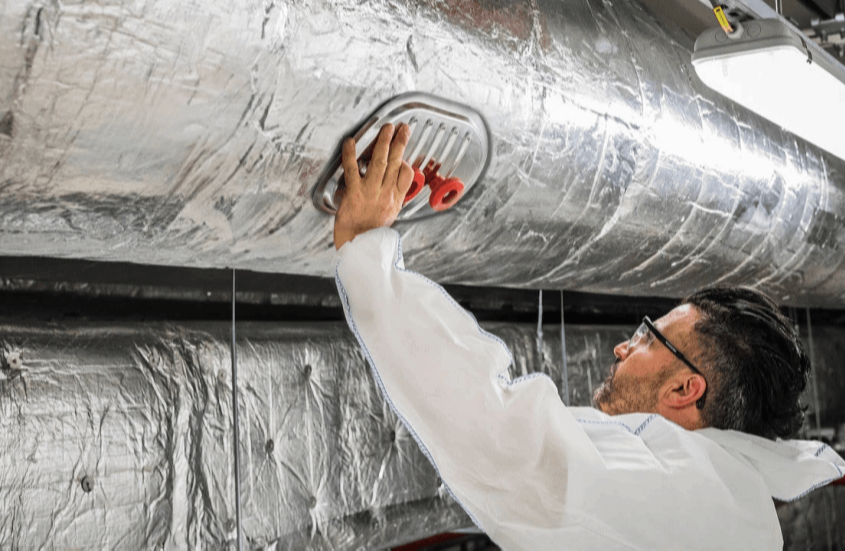
To ensure a ventilation system can actually be maintained, EN 12097 sets clear requirements for inspection hatches.

Key obligations include:
Maximum distance: No duct section may be more than
• 7.5 m from an access hatch
• one dimensional change away
• one direction change of more than 45° away

    Strategic placement: Access must be provided at all components that require cleaning or inspection — fire dampers, coils, filters, silencers, bends.

    Directional changes: Every significant change of direction or branch must be accessible so cleaning tools can pass through.

    Correct dimensions: Openings must be large enough for effective cleaning equipment, not just cameras.

    Even with modern cleaning technology, the rule remains: if you can’t access it, you can’t maintain it.


Insurance Reality: Accessibility Determines Coverage
After a fire, insurers and investigators look for one thing:
Was the system maintainable and maintained according to EN 15780 and EN 12097?

The argument “that part wasn’t accessible” is no longer accepted.
If a duct section without compliant access hatches contributed to ignition or fire spread:
    The system may be classified as not maintainable
    Cleaning certificates may be considered invalid
    Insurance claims may be partially or fully rejected
    In short: no inspection hatch, no coverage.


Two Hard Realities for Facility Managers
    1. Fire Origin in an Inaccessible Section
If a fire starts in a duct that was never cleaned due to lack of access, insurers often treat this as a breach of policy conditions.
Outcome: claim denied.

    2. Fire or Smoke Spread Through the Duct System
If the ductwork acts as a pathway for fire or smoke, insurers typically refuse to cover damage outside the original ignition zone.
Outcome: major financial loss.


Your First Step: Ensure Access Before You Ensure Cleanliness
You cannot comply with EN 15780 (cleanliness) unless you first comply with EN 12097 (accessibility).

For facility managers, this means:
    Assess your inspection hatches
    Identify inaccessible sections
    Plan remediation before your next cleaning cycle
    Document compliance for insurance and safety audits
  Don’t wait for a fire investigation to expose a blind spot in your system.
    Make sure your ductwork is accessible, maintainable and genuinely clean.

What Facility Managers Must Know About the New Standard

From July 2025, the updated European standard EN 15780:2025 replaces the 2011 version. This revision introduces several important changes that directly influence how ventilation and kitchen extraction systems must be inspected, cleaned and documented.

For facility managers, this update is not just a technical detail — it affects compliance, insurance, budgeting and operational safety.

Clear Rules for Commercial Kitchen Extraction (Annex J) 

For the first time, the standard includes specific requirements for kitchen extraction systems: hoods, ductwork, fans and carbon filters.

New On‑Site Wiping Test (Annex K)

The 2025 revision introduces a practical wiping test to assess cleanliness levels during inspections.

Updated Cleanliness Levels & Extraction Duct Clarification

All extraction ducts — regardless of class — now have a uniform limit of 9.0 g/m². This removes ambiguity and ensures consistent expectations across all building types.


1. Clear Rules for Commercial Kitchen Extraction (Annex J)
For the first time, the standard includes specific requirements for kitchen extraction systems: hoods, ductwork, fans and carbon filters.

What’s new:
Grease thresholds are now defined:
Average grease layer ≥ 200 µm → system requires cleaning
Local peaks ≥ 500 µm → urgent cleaning required
Recommended measurement method:  


The Wet Film Thickness Test (WFTT)
After cleaning: No measurement may exceed 50 µm

Why this matters for facility managers
You now have objective, measurable criteria to determine when a kitchen extraction system must be cleaned — removing guesswork and strengthening your compliance documentation.


2. New On‑Site Wiping Test (Annex K)
The 2025 revision introduces a practical wiping test to assess cleanliness levels during inspections.

Acceptable values:
    Threshold for cleaning: 4.0 g/m²
    Clean system after service: 2.0 g/m²
    New components before commissioning: 2.0 g/m²

Why this matters
This test gives facility teams a quick, reliable method to verify cleanliness on-site — especially useful for validating contractor work or checking problem areas.

3. Updated Cleanliness Levels & Extraction Duct Clarification
The familiar cleanliness classes remain, but with clearer definitions:
    Low: < 4.5 g/m²
    Medium: < 3.0 g/m²
    High: < 0.6 g/m²
For extraction ducts, the maximum acceptable dust load is now uniformly 9.0 g/m² for all quality classes, a clarification compared to the old standard.

Why this matters
This removes ambiguity and ensures consistent expectations across all building types.


4. Airtightness Requirements Updated
The new standard aligns airtightness classes with EN 16798‑3:
    Basic → ATC 4
    Intermediate → ATC 3
    Advanced → ATC 2

Why this matters
Better alignment means easier planning when upgrading or expanding ventilation systems, and clearer expectations during commissioning.


What This Means for Facility Managers
The updated EN 15780:2025 standard provides:

✔ Clearer compliance requirements
You can now demonstrate maintenance decisions using measurable thresholds — essential during audits or insurance reviews.

✔ More reliable cleanliness assessments
Both the WFTT and the new wiping test give you practical tools to verify system condition.

✔ Stronger documentation for insurers
Objective measurements reduce the risk of disputes after fire or contamination incidents.

✔ Better control over contractor performance
You can validate cleaning quality on the spot, not just rely on visual inspection.

✔ Improved safety and indoor air quality
More precise standards help ensure systems are maintained before they become a risk.


How #HamsterCleaning Supports Facility Managers
We apply the EN 15780:2025 requirements in full, ensuring:
    Accurate measurement of grease and dust levels
    Transparent reporting with before/after values
    Cleaning methods aligned with the new thresholds
    Documentation suitable for audits, insurers and internal compliance
For facility managers, this means fewer uncertainties, fewer risks and a maintenance strategy that aligns with the latest European standards.

Built for Facility Managers

The 95G Method, a clean, compliant and high‑performing ventilation system is never the result of chance. It requires planning, technical expertise and structured follow‑up.

It was developed with facility managers in mind: a predictable, data‑driven approach that maps your installation, delivers certified cleaning and provides long‑term oversight — with a guaranteed minimum 95% cleanliness result.

Assessment —
Think First, Then Act 

For facility managers, the biggest risk is starting work without understanding the system. That’s why the 95G Method begins with a thorough Assessment phase.

Cleaning — Certified, Controlled and Guaranteed

During the Cleaning phase, the focus shifts to quality, safety and measurable results.

Management — Documented and Future‑Proof

A one‑off cleaning is not enough to maintain compliance or protect your building.
The final phase of the 95G Method focuses on long‑term management.

The 95G Method — Built for Facility Managers
A clean, compliant and high‑performing ventilation system is never the result of chance. It requires, #planning, #technical_expertise and #structure_ follow‑up. The 95G Method was developed with facility managers in mind: a predictable, data‑driven approach that maps your installation, delivers certified cleaning and provides long‑term oversight — with a guaranteed minimum 95% cleanliness result.

1. Assessment — Think First, Then Act
For facility managers, the biggest risk is starting work without understanding the system. That’s why the 95G Method begins with a thorough Assessment phase.

#Engineered_insight
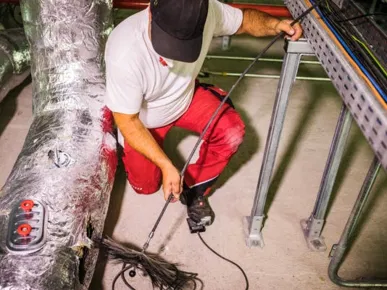
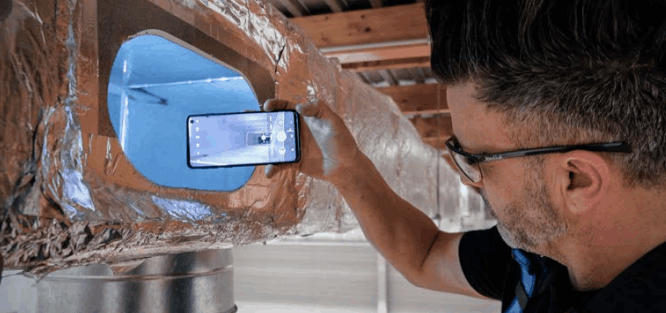
We perform a detailed inspection of your entire ventilation network. Using our own digital tools and AI analysis, we identify:
- inaccessible or high‑risk zones
- components requiring special attention
- compliance gaps (EN 15780 / EN 12097)
- the most efficient cleaning strategy

This gives you a clear, objective overview — not assumptions or guesswork.
Prepared for safe and efficient work
Before cleaning begins, we ensure:
- all inspection hatches are checked
- the system is safely prepared
- the work zone is secured and clearly marked
For facility managers, this means **no surprises**, no downtime risks and a fully controlled process.


2. Cleaning — Certified, Controlled and Guaranteed
During the Cleaning phase, the focus shifts to quality, safety and measurable results.

Certified execution. Our technicians, equipment and processes meet the strictest industry standards. Every specialist is trained to work safely, consistently and in line with European regulations.

Guaranteed performance. The 95G Method ensures a minimum 95% cleanliness score, verified through objective measurement techniques.
This gives facility managers:
- reliable before/after documentation
- audit‑ready evidence
- predictable maintenance outcomes

What makes the 95G Method different from traditional cleaning
- Ultra‑low linear brush speeds. Dirt is loosened in a controlled way, reducing the risk of spreading contamination.
- Ultra‑low rotational speeds. Ensures precise removal without damaging the ductwork.
- Specialized brushes. Designed for low‑speed, high‑efficiency cleaning.
- Point extraction instead of general negative pressure. Contamination is captured exactly where it is released, dramatically reducing the risk of dust entering occupied spaces.For facility managers, this means cleaning that is safer, more effective and fully traceable.

3. Management — Documented and Future‑Proof
A one‑off cleaning is not enough to maintain compliance or protect your building.


The final phase of the 95G Method focuses on long‑term management.
Documented for audits and insurance
You receive a clear Smart Report via our myHamster platform, including:
- before/after images
- measurement results
- system observations
- recommendations for next steps


This documentation supports:
- insurance claims
- fire safety audits
- internal compliance reporting
- maintenance planning

Progressive follow‑up
Through SLAs and periodic monitoring, we ensure your ventilation system remains in optimal condition.
This helps facility managers:
- plan budgets more accurately
- avoid unexpected failures
- maintain compliance year‑round
- extend the lifespan of the installation

In Summary — Why Facility Managers Choose the 95G Method
**Predictable results with a guaranteed 95% cleanliness score
**Objective data for audits, insurers and internal reporting
**Safer cleaning with minimal disruption to building operations
**Full transparency through digital reporting and AI‑supported assessment
**Long‑term control through structured follow‑up and monitoring


The 95G Method gives facility managers what they need most, #Clarity, #Compliance and #Confidence that the ventilation system is truly clean and under control.